
As the blessed month of Ramadan 2024 approaches its end, Muslims around the world prepare to fulfil the essential obligation of Zakatul Fitr 2024. This charitable act is a cornerstone of Ramadan, aimed at ensuring that everyone within the community can share in the joyous celebration of Eid ul-Fitr. Understanding the purpose, calculation, and timely distribution of Zakatul Fitr is crucial for all Muslims observing Ramadan.
Zakatul Fitr, also known as Sadaqah al-Fitr, is a mandatory charitable offering given to those in need before the Eid prayer. It serves to purify our fasts from any minor errors committed during Ramadan, while simultaneously spreading a spirit of generosity and social inclusion. Determining who is eligible to pay Zakatul Fitr 2024, as well as calculating the appropriate amount, are important aspects of fulfilling this duty.
By actively participating in Zakatul Fitr 2024, we not only follow a vital pillar of Islam but also embody the true essence of Ramadan. This act of giving brings blessings to ourselves, lifts the hearts of our brothers and sisters, and strengthens the bonds of our community as we celebrate Eid al-Fitr together.
What is Zakatul Fitr?
- Definition: Zakatul Fitr (or Sadaqah al-Fitr) is a mandatory charitable offering given to those in need before the Eid ul-Fitr prayer.
- Significance: It purifies our Ramadan fasts and ensures everyone in our community can share in the joy of Eid. “The Messenger of Allah (peace and blessings of Allah be upon him) made Zakat al-Fitr obligatory as a means of purifying the fasting person from idle talk and foul language, and to feed the poor. Whoever pays it before the prayer, it is an accepted zakah, and whoever pays it after the prayer, it is just a kind of charity (sadaqah).” (Reported by Abu Dawood, 1371
- Difference from Zakat al-Maal: Zakatul Fitr is a specific obligation at the end of Ramadan, while Zakat al-Maal is our regular charitable duty based on wealth.
Who Must Pay Zakatul Fitr?
- Eligibility: Every Muslim (adult or child) who possesses enough food for themselves and their dependents for one day and night during Ramadan.
- Head of Household: The head of the household is responsible for paying Zakatul Fitr for themselves and their dependents.
Do you have to pay it for your employees?
You are only obligated to pay Zakatul Fitr for those who are your dependents, such as your spouse and children. others, like employees with salaries, should pay Zakatul Fitr from their own earnings if they meet the eligibility requirements.
Obligation
Zakatul fitr is an obligation on every Muslim who possesses enough food for themselves and their dependents for one day and night during Ramadan. Ibn ‘Umar (may Allah be pleased with him) said: “The Messenger of Allah (peace and blessings of Allah be upon him) made Zakat al-Fitr, one saa’ of dates or one saa’ of barley, obligatory on the Muslims, slave and free, male and female, young and old.” (Al-Bukhaari, 1407)
How to calculate Zakatul Fitr 2024
- The Zakatul Fitr is measured in saa’ (one saa’ equals four mud), but the saa’ is a measure of volume, so definitely the equivalent weight of one saa’ will be different for different food substances, it is best to measure with the saa’ or mud (both measurements are sold in Islamic stores nationwide) but if one can’t get any of the two, then one saa’ is roughly equivalent to:
- Twelve milk tin or
- Four handfuls (the amount that the two hands of an average sized man can contain when brought together) or
- Three kilograms of rice
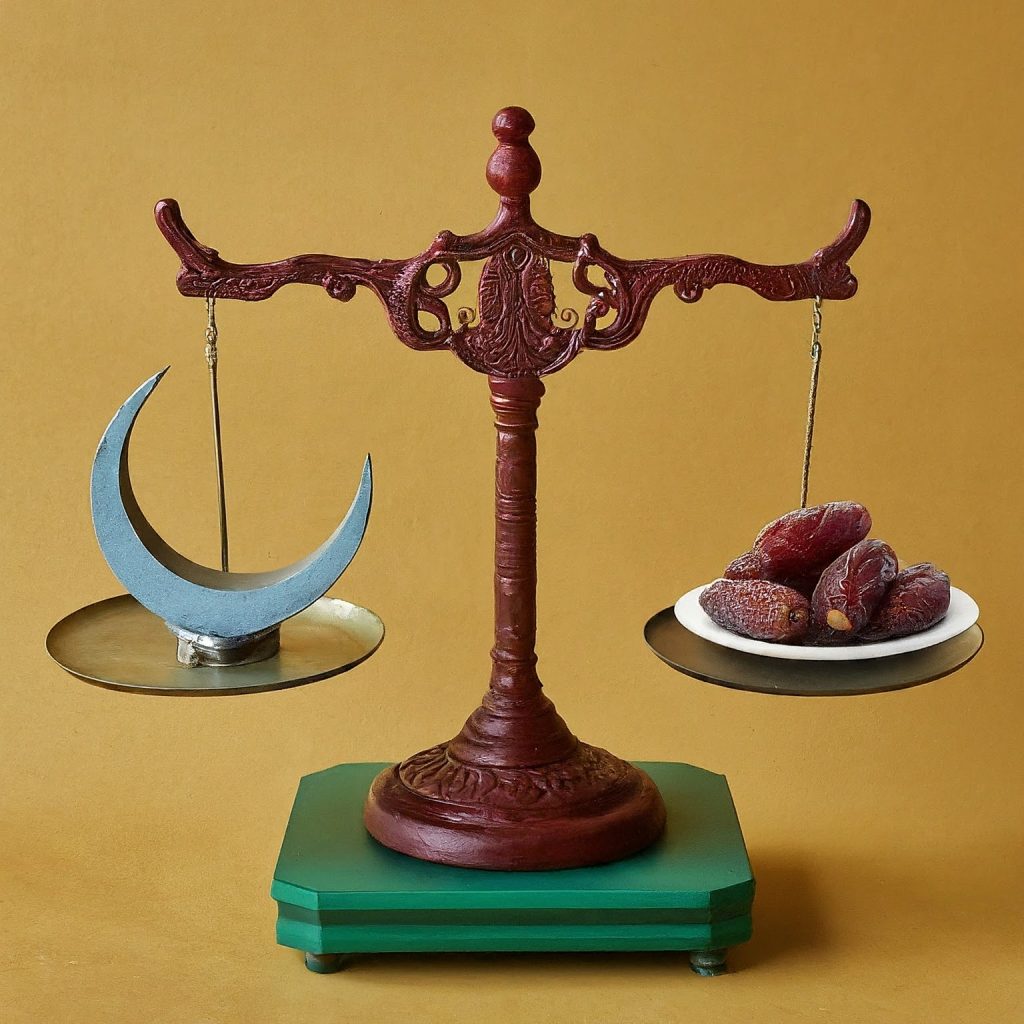
Abu Sa’eed al-Khudri (may Allah be pleased with him) said: “At the time of the Prophet (peace and blessings of Allah be upon him) we used to give it in the form of a saa’ of food…” (Reported by al-Bukhaari, 1412)
Type of food to be given
The food to be given is the food that the people of the community consider as staple food, they used to give dates during the time of the Prophet because people used to consider dates as staple food, if one lives in a community where dates are not considered food, one should not give dates, rather one should give what people will be able to benefit from, like in Nigeria, one can give rice, bean, garri, semo wheat and the likes.
Abu Sa’eed al-Khudri (may Allah be pleased with him) said: “At the time of the Messenger of Allah (peace and blessings of Allah be upon him), we used to give a saa’ of food on the day of Fitr.” Abu Sa’eed said: “And our food was barley, raisins, aqit (dried yoghurt) and dates.” (Al-Bukhaari, 1408)
Can the amount in cash be given?
It is not permissible to give the amount of zakatul fitr in cash according to the majority of the scholars and the three imams except Abu Hanifah, the Prophet commanded that food be given even though there was money in circulation in his time also.
When to pay Zakatul Fitr
- Ideal Time: After sunset on the last day of Ramadan, up until the Eid prayer.
- The Prophet (peace and blessings of Allah be upon him) “commanded that it (Zakatul Fitr) should be given before the people went out to pray.” (Al-Bukhaari, 1407).
- Earlier is also permissible: Giving Zakatul Fitr a day or two eary is also acceptable. Naafi’ said: “Ibn ‘Umar used to send Zakat al-Fitr to the one who was collecting it two or three days before (‘Eid) al-Fitr.”
- Don’t Miss It: Delaying Zakatul Fitr beyond the Eid prayer is not acceptable, and it turns it into a regular charity.
- “Whoever pays it before the prayer, it is an accepted zakah, and whoever pays it after the prayer, it is just a kind of charity.” (Abu Dawood, 1371)
Who should it be given to?
Zakatul Fitr should be given to the poor and needy, it should not be given to those that are self-sufficient and it should not be given to those who are not Muslims.
The Zakatul fitir can be shared among a group of people i.e the zakah of four people can be given to four people, and the zakah of variuos people can be given to one person.
Imaam Ahmad (may Allah have mercy on him) stated that it is permissible to share out one saa’ among a group of people, or to give many saa’s to one person.
Conclusion
Zakatul Fitr is a beautiful act of worship that embodies the spirit of Ramadan. By understanding its purpose, fulfilling our obligations, and giving generously, we purify our fasts, bring joy to others, and strengthen the bonds of our community. May Allah (SWT) accept our acts of charity during this blessed month and grant us a joyous and spiritually fulfilling Eid ul-Fitr!
you can read more about zakatul fitr here and you can visit our shop here for more benefitial resources.

Good